Isle Theory Editorial Team
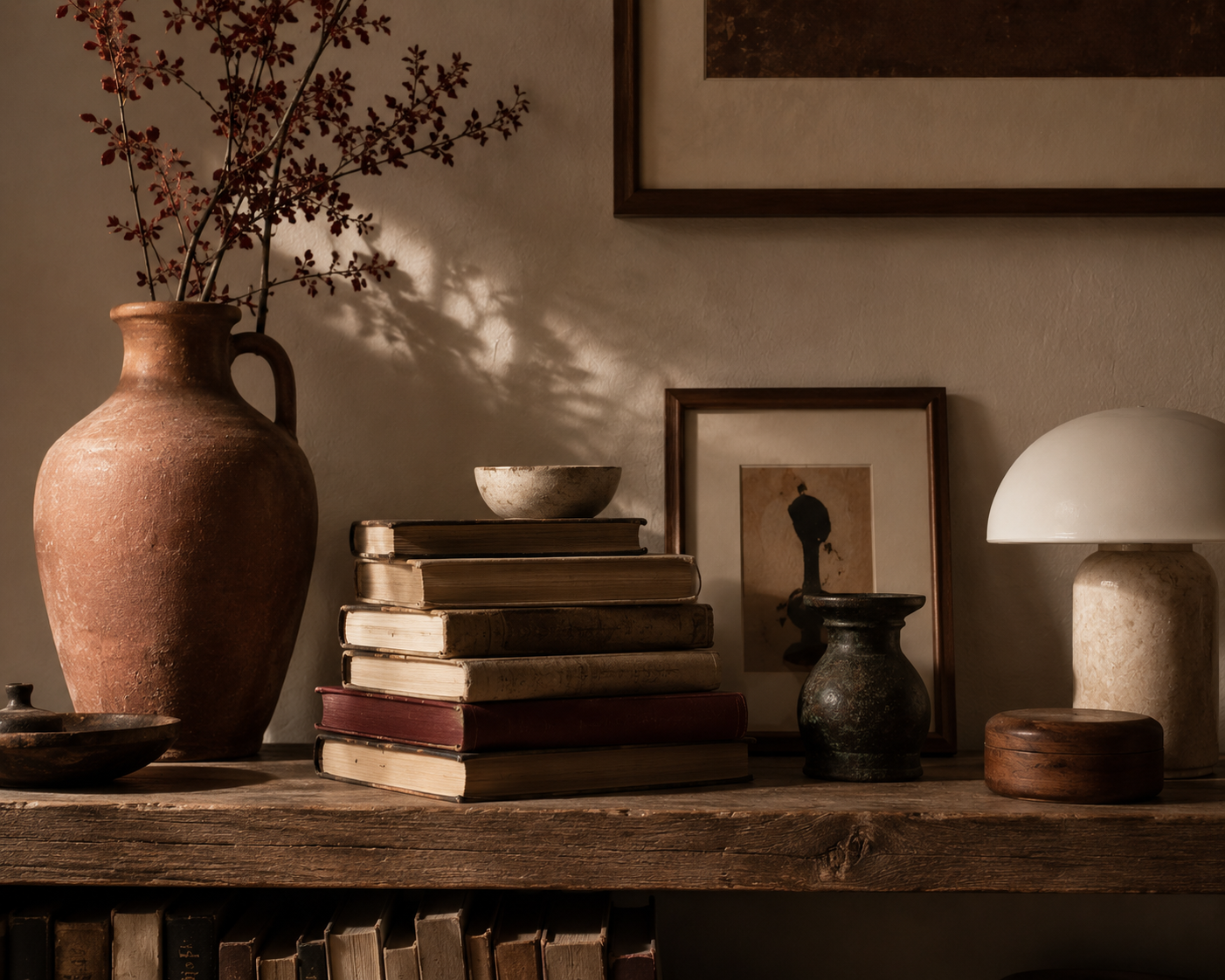
Walk into a home that feels collected, not decorated home style, and you can usually tell within a few seconds — even if you can’t quite say why. Nothing matches on purpose. A worn wooden bowl sits next to a brand-new lamp. A gallery wall mixes a flea-market frame with a print bought last month. It doesn’t look unfinished. It looks like it happened slowly, to someone specific.
That’s the whole idea behind the phrase, which traces back to legendary decorator Albert Hadley’s often-repeated line that a room should feel collected, not decorated. It’s had a real resurgence in design media over the past few years, not as a fleeting trend, but as a pushback against the opposite: rooms that arrive in one shipment, styled to match a single aesthetic, and photograph well before anyone’s actually lived in them.
It’s easy to lump this in with eclectic or maximalist style, since all three mix eras and objects. The distinction that design writers keep coming back to is time. Maximalism is about density — filling a space with as much pattern, color, and object as it can hold. Eclectic style is about breadth — a deliberate mix of styles chosen for how they balance each other, often assembled in one pass. A collected home is about neither. It’s built slowly, piece by piece, often without a plan at all, and it’s allowed to look unfinished at any given moment because it’s never actually finished.
That’s also what separates it from a themed “vintage” look. A collected room doesn’t commit to one era. It holds a grandparent’s side table, something found at a flea market last summer, and something bought new last week — together, on purpose, because each one earned its place rather than matched a mood board.
The most common mistake in trying to build this look fast is buying a full new set of “collected-looking” objects in one trip — which just recreates the showroom problem with a different aesthetic. The actual starting point is almost always what’s already in the house: a piece inherited from family, something bought years ago that’s outlived three other redecorating attempts, or an object that’s simply never left. Those pieces already carry the “gathered over time” quality a new purchase can’t fake. Everything else gets built around them, not the other way around.
Interior designers who work in this style consistently describe the same sequence: secondhand first, new to fill in what’s missing. Thrift stores, estate sales, consignment shops, and local marketplace listings are where most of the texture comes from — a vintage rug, a set of mismatched dining chairs, a brass or ceramic lamp base. New pieces then get chosen deliberately to support what’s already there, rather than the whole room being sourced from a single retailer’s catalog. Vintage rugs and brass or copper objects in particular are frequently mentioned by designers as easy, relatively affordable entry points, since they age well and carry a patina that new pieces don’t have yet.
A room with everything from everywhere can tip into clutter fast without something to hold it together. The fix designers describe most often isn’t a strict color rule — it’s choosing one or two “anchor” pieces per room and letting everything else support them. That might be a large vintage mirror, a statement dining table, or a piece of art with real presence. Once that anchor is in place, smaller collected objects — books, ceramics, framed photos — have somewhere to sit rather than competing with each other for attention.
Maybe the hardest part of this style to execute is also the simplest to describe: it isn’t supposed to be finished on a timeline. A room built this way is allowed to sit at 80% for months while the right piece for that empty corner turns up. That’s not a compromise — it’s the actual mechanism that makes a space feel collected rather than decorated in the first place. Rooms assembled all at once, however well-chosen the pieces, tend to read as staged precisely because nothing in them had to wait.
Not quite. Eclectic style is about deliberately mixing different eras and styles into one cohesive-feeling room, often assembled in a single design pass. Collected not decorated home style is less about the mix itself and more about how a room came together — slowly, over time, often without a master plan, so it looks gathered rather than curated.
No — the style is defined by the mix and the pace, not by any specific era. A room can include brand-new pieces as long as they’re chosen deliberately alongside older or secondhand ones, rather than the whole space arriving from a single new furniture set.
With what’s already there. Look at what you own that has some history to it — even one piece — and build outward from it, adding secondhand finds first and filling any real gaps with something new.
We research and select every product featured on Isle Theory. Our recommendations reflect independent editorial judgment, not paid placement.
No spam. Unsubscribe anytime.