Isle Theory Editorial Team
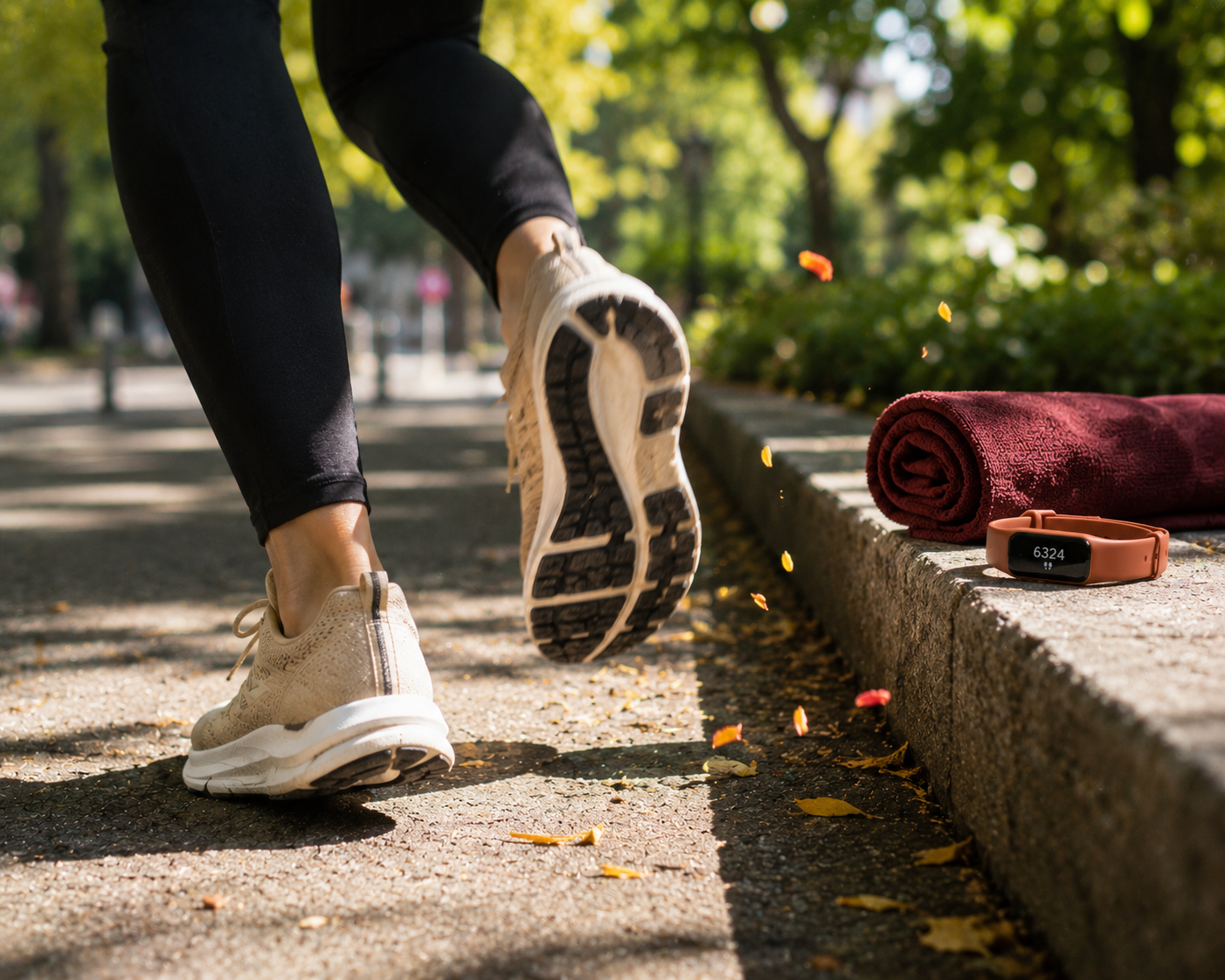
The Japanese walking method explained simply: it’s not a mystical practice, and it’s not a marketing gimmick — it’s a structured interval walk, three minutes fast and three minutes slow, repeated for about half an hour.
We’re genuinely into it here for a reason that has nothing to do with hype: it’s one of the rare viral fitness trends that’s actually backed by more than 15 years of peer-reviewed research, not a single influencer’s opinion. It was developed by researchers at Shinshu University in Japan, tested for years before it ever hit social media, and it’s built for real life — no gym, no equipment, no subscription required. Below, we break down what the research actually found, exactly how to do it, and the two simple pieces of gear worth having if you want to start today.
Also called Interval Walking Training, or IWT, the method alternates three minutes of brisk, faster-paced walking with three minutes of slower, recovery-paced walking. You repeat that cycle for about five rounds, roughly 30 minutes total, ideally four or more times a week. That’s the entire structure — no incline changes, no special footwork, nothing to memorize beyond “fast, then slow, then fast again.”
The method traces back to research at Shinshu University’s Graduate School of Medicine in Matsumoto, Japan, led by Professor Hiroshi Nose and Associate Professor Shizue Masuki. Their team was specifically trying to design an exercise program that ordinary middle-aged and older adults would actually stick with — not an elite-athlete protocol, a real-world one.
If it feels like the Japanese walking method showed up in your feed overnight, that’s a fair read — interval walking’s search interest jumped nearly 3,000% year-over-year, according to PureGym’s 2026 fitness report, one of the largest single-trend surges tracked in that report. Social platforms picked it up as a low-impact alternative to running and step-count chasing, and outlets from TIME to major hospital health blogs followed with their own explainers.
What’s worth noting: the underlying research isn’t new at all. The original study was published back in 2007. What’s new is the attention — which, for once, is pointing at something with real evidence behind it rather than just a good hook.
The foundational study, published in Mayo Clinic Proceedings in 2007 by Nemoto, Gen-no, Masuki, Okazaki, and Nose, followed roughly 250 middle-aged and older adults over five months. Participants were split into three groups: no structured walking, continuous walking at a steady moderate pace, and interval walking at least four days a week.
The interval-walking group came out ahead across the board. Compared with the steady-pace group, they saw meaningfully greater gains in thigh and leg muscle strength — commonly reported in the 13–17% range — along with better aerobic capacity and a larger drop in blood pressure. We’ll say this plainly: these are promising, well-documented findings from a legitimate peer-reviewed study, not a guarantee of any specific personal result, and they don’t replace medical guidance for anyone managing a diagnosed condition.
Here’s the actual protocol, step by step:
The slow interval is easy to rush through, especially once you feel warmed up — but the contrast between the two paces is the entire mechanism. Letting yourself actually slow down is part of the method, not a shortcut to skip.
The honest answer is: almost nothing. This is one of the few genuinely low-cost fitness trends worth trying — no class package, no equipment, no app subscription required to get the real benefit. That said, two things make the Japanese walking method noticeably more comfortable and easier to stick with.
A supportive walking shoe matters more here than in steady-pace walking, since you’re shifting speed and impact repeatedly in the same session. A simple step or activity tracker takes the guesswork out of timing your intervals, so you’re not checking a phone screen mid-stride.
A consistently top-recommended walking and running shoe in 2026 roundups, praised for balanced cushioning that holds up over long, repeated-pace sessions like this one.
A straightforward, entry-level activity tracker built for exactly this — steps, pace, and time, without smartwatch-level complexity or cost.
Japanese walking is low-impact and accessible to most fitness levels, and the original research specifically included older adults. Still, if you’re new to structured exercise, managing a cardiovascular condition, recovering from an injury, or navigating joint pain, it’s worth checking in with a doctor before starting — not because this method is risky, but because any new exercise routine deserves that step when a real health condition is already in the picture. This article is general information, not a substitute for guidance from your own healthcare provider.
The Japanese walking method, explained honestly: it’s genuinely research-backed. The core study was published in Mayo Clinic Proceedings in 2007, and the underlying interval-walking research dates back over 15 years — well before it went viral on social platforms in the past couple of years.
The structure is the point. Alternating three-minute fast and slow intervals, rather than one steady pace, is what the original research actually tested — and it’s the specific pattern the reported strength and cardiovascular gains are tied to.
No. A supportive pair of shoes and, optionally, a basic step tracker to help pace your intervals are genuinely all you need — no gym, incline, or subscription required.
The original research protocol used at least 4 sessions a week over 5 months. Consistency at that frequency, more than any single session, is what the study’s results were actually built on.
We research and select every product featured on Isle Theory. Our recommendations reflect independent editorial judgment, not paid placement.
No spam. Unsubscribe anytime.