Isle Theory Editorial Team
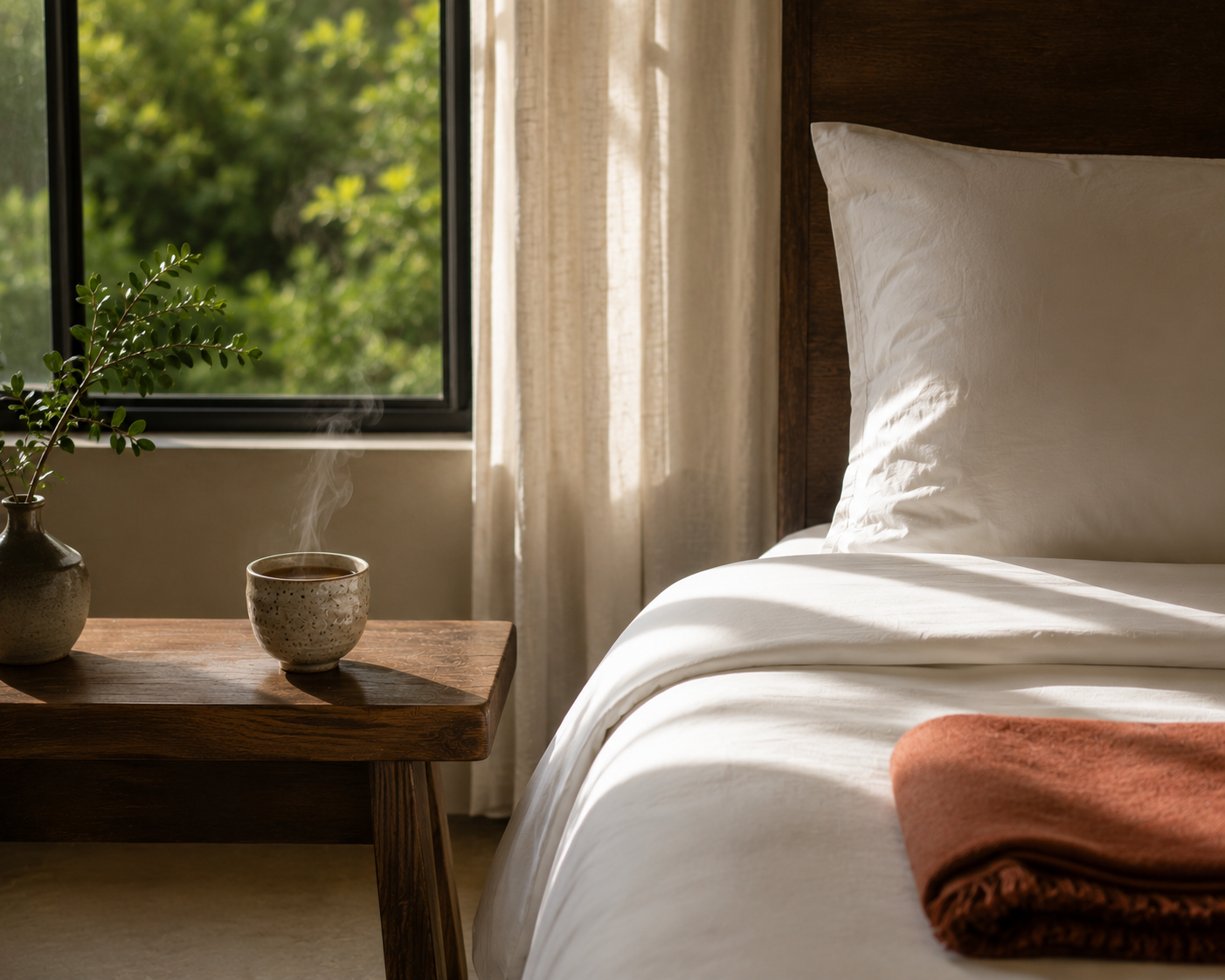
Quiet luxury hotels 2026 is one of the most-searched phrases in travel right now, and most of what comes up when you look it up is either a buzzword explainer or a highlight reel of beautiful rooms — not an answer to the actual question underneath it. What, structurally, makes a hotel feel like quiet luxury, beyond the vibe? It isn’t a design style you can shop for. It’s a set of specific, learnable decisions — about scale, about material, about how privacy is built into a floor plan — and once you know what they are, you start noticing which hotels are actually doing it and which ones are just borrowing the language.
Hilton’s own research gave this moment a name: hushpitality, the idea that restraint — not abundance — has become the new luxury currency. The hotel version of that shift shows up as fewer rooms, not more; natural materials chosen for how they age rather than how they photograph; and a service style that reads as attentive rather than performative. None of that is about being small for its own sake. It’s about every design decision protecting a guest’s sense of privacy and calm, instead of competing for their attention.
Small scale. A lower room count isn’t a limitation here — it’s the mechanism. Fewer guests sharing a garden, a pool, or a breakfast room means less competition for space and quiet, which is the entire point.
Design restraint. Natural materials — stone, timber, plaster — left mostly unornamented, with color and pattern used sparingly rather than as the main event. The goal is a room that recedes rather than performs.
Privacy-first layout. This is the one that’s easiest to fake and hardest to deliver. It shows up as physical distance between guest spaces (gardens, pathways, separate buildings) rather than just a “do not disturb” sign — privacy built into the architecture, not bolted onto the service.
None of these are ranked — they’re three different, genuine expressions of the same underlying idea, in three different countries.
Hotel The Mitsui Kyoto. A 160-room property built on the former Kyoto estate of the Mitsui family, directly beside Nijo Castle. The design team — architect André Fu on the guest rooms, with a separate landscape architect, spa designer, and master design adviser working in concert — built the whole property around restraint: natural stone bathtubs, hand-joined wood, and a private onsen exceeding 100 square meters for guests who want to bathe without ever encountering another guest. It holds the Michelin Guide’s Three Key distinction, the top tier in that program.
Villa San Michele, A Belmond Hotel, Florence. A former 15th-century monastery on a hillside above Florence, with a façade attributed to Michelangelo. At 39 rooms and suites, it’s the smallest of the three by a wide margin, and the design leans into that history rather than smoothing it over — terracotta floors, Carrara marble, and gardens that step down the hillside instead of surrounding a central lawn.
JW Marriott Venice Resort & Spa. This one is worth a caveat: at 16 hectares across the whole of Isola delle Rose, it is not a small property overall. What earns it a place here is a specific part of it — a cluster of secluded garden residences (La Residenza, La Maisonette, Villa Rose, L’Uliveto) tucked into fragrant rose gardens and century-old olive groves, offering their own check-in and a genuinely private stay within the larger resort. It’s the part of the property that trend coverage of hushpitality keeps returning to, and it’s the part worth booking specifically if privacy is the goal.
Yes, quiet luxury hotels 2026 has held up as one of the hospitality industry’s more consistent trends this year, with restraint, privacy, and design-forward simplicity continuing to outpace overt opulence as the top luxury signal, according to Hilton’s own 2026 research.
Not strictly, but a lower room count is one of the clearest structural signals, since it directly reduces competition for shared space. A handful of larger resorts achieve the same effect by building genuinely private, secluded enclaves within a bigger property.
Not quite. Minimalism is about visual reduction. Quiet luxury is about restraint in service of privacy and calm — it can include rich materials and detailed craftsmanship, as long as none of it is competing for the guest’s attention.
We research and select every product featured on Isle Theory. Our recommendations reflect independent editorial judgment, not paid placement.
No spam. Unsubscribe anytime.