Isle Theory Editorial Team
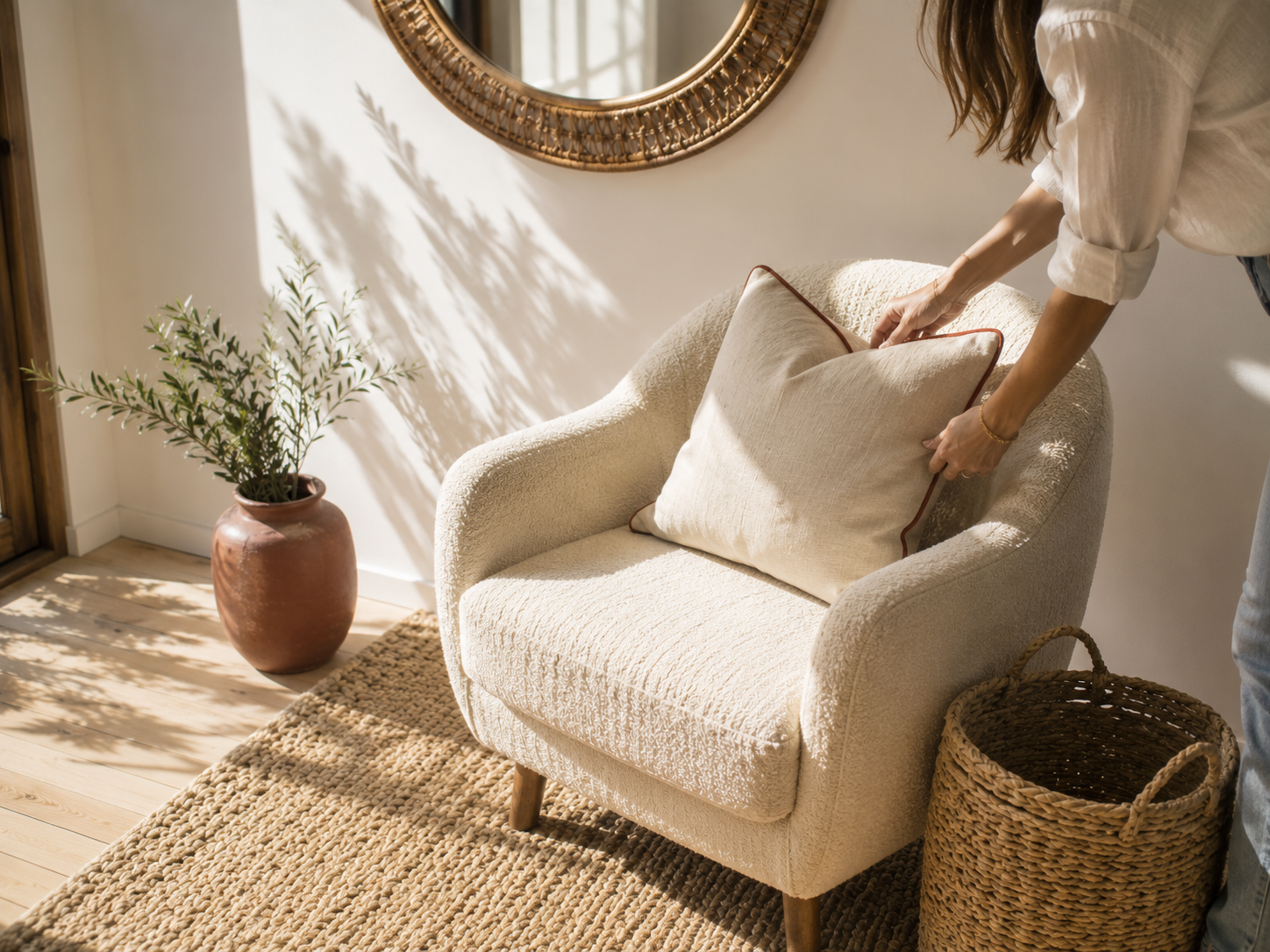
Small space quiet luxury decor has a reputation problem — too many “small space” guides default to bare walls and multipurpose furniture, treating texture as a luxury only big rooms can afford. It’s the opposite. A small room with real texture — a chunky jute rug, a rattan mirror catching the light, linen that actually looks touched rather than staged — reads richer than a large room with nothing in it. The trick isn’t restraint. It’s choosing fewer pieces that do more.
A too-small rug is the single most common mistake in a compact living room, and it’s a scale problem more than a style one: a rug that leaves a wide gap of bare floor on every side makes the whole room look smaller, not larger, because the eye reads the empty border as wasted space. A safe general guideline for a small living room is a rug that runs roughly 200×300cm, or the largest your specific layout can hold — big enough that at least the front legs of every seating piece rest on it.
Handspun by artisans in India, this jute rug brings texture and warmth without color competing for attention — a natural first layer that grounds a small room instead of shrinking it. Available in several sizes; choose the largest your room can hold, following the general small-space sizing guideline above.
Rattan does something a flat mirror frame can’t — it catches and scatters light instead of just reflecting it, which reads as warm rather than cold in a small space that often has to work harder for natural light. A round shape is a genuine small-space advantage here too: round mirrors visually soften a room’s corners in a way rectangular ones don’t, which matters more in a compact footprint than a large one.
A natural rattan frame around quality mirrored glass, handcrafted in Indonesia. The round shape and warm rattan texture do double duty — reflecting light and softening the room’s hard edges at once.
Linen is the texture that’s supposed to look a little imperfect — the slight wrinkle and softness is the point, not a flaw to iron out. A pillow cover in a true 100% linen, not a linen-look blend, is the lowest-commitment way to bring that texture in before touching anything larger.
Made from 100% linen that reverses to the same finish on both sides, in a range of neutral tones that sit easily alongside jute and rattan without competing.
A small space punishes clutter faster than a large one — there’s simply less room for it to hide. A woven storage basket solves two problems in one piece: it’s genuinely functional storage, and it adds another natural texture without reading as “more stuff.”
Handwoven seagrass in natural, black, or two-tone finishes — functional storage that reads as texture rather than clutter, in a range of sizes to fit under a console or beside a chair.
The through-line across all four pieces above is restraint at the category level, not the texture level: one rug, one mirror, one textile layer, one storage piece, each doing real work, none of them fighting for attention. If you’re already experimenting with layering elsewhere in the home — pairing patterns that share a color family rather than matching exactly — the same instinct applies here at a smaller scale: texture and material can share a warm, neutral story without every piece needing to match.
Small space quiet luxury decor leans on a few well-chosen natural materials — jute, rattan, linen — rather than a lot of decorative objects, so a compact room feels rich without feeling full.
Not necessarily — a single well-chosen rug, mirror, textile, and storage piece go further than a room full of smaller decorative objects, and each of the four picks above works as a standalone starting point rather than a full set that has to be bought together.
Most designers land on roughly three to four distinct textures as the practical ceiling before a small room starts to feel busy rather than layered — which is exactly the four-category structure (floor, light, textile, storage) this guide uses.
Neither has to match exactly — a rug in the same warm, neutral family as the room’s other textures reads as intentional, while an exact match can flatten the layered effect this look depends on.
Yes — every piece here is freestanding or hangs with standard hardware, so none of it requires painting, built-ins, or anything that wouldn’t come with you at move-out.
We research and select every product featured on Isle Theory. Our recommendations reflect independent editorial judgment, not paid placement.